
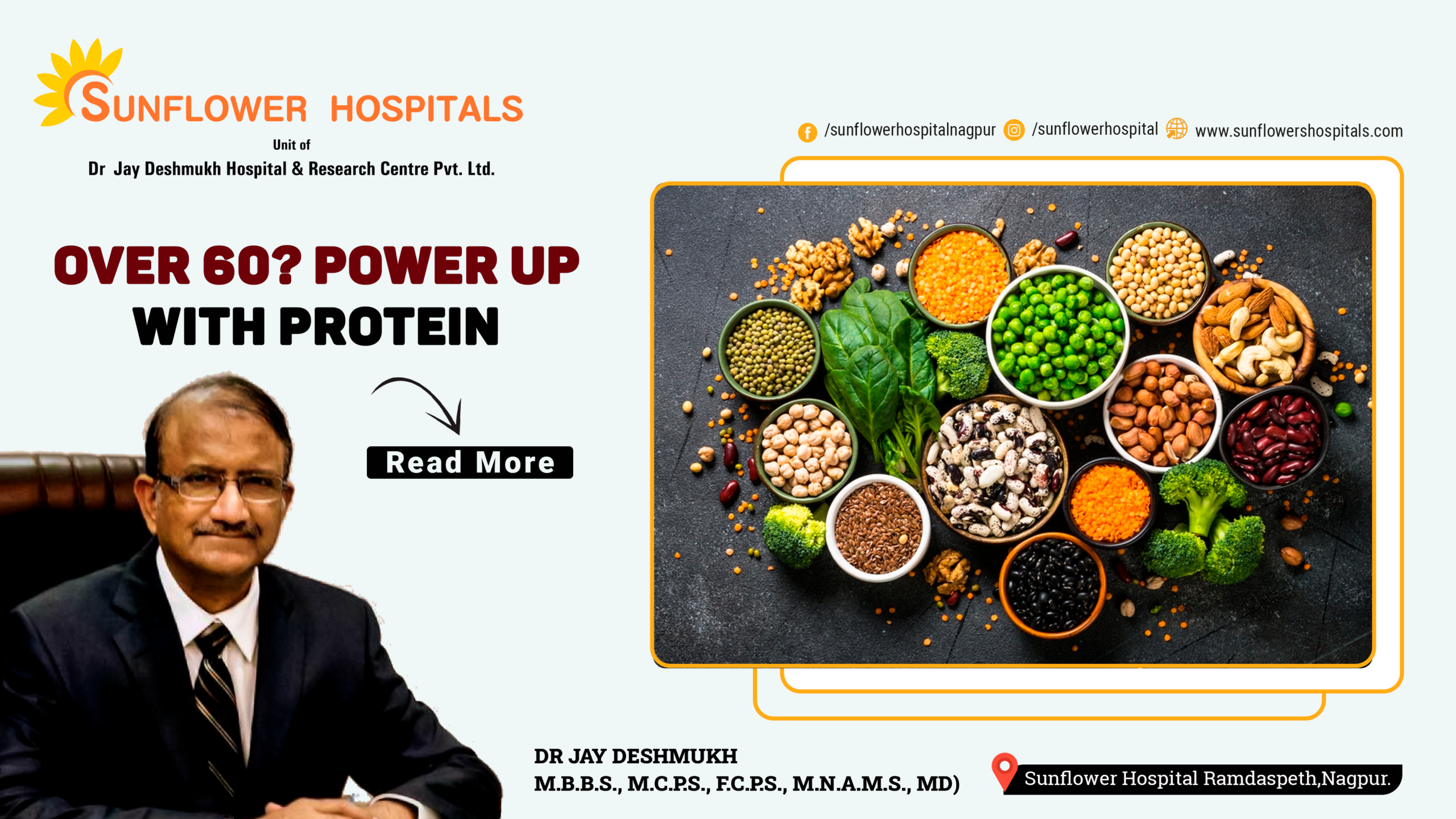
How Much Protein Is Needed During Illness?
During Acute Or Chronic Illness, Infection, recovery from surgery, or malnutrition, Requirements May Increase To Around 1.2-1.5 G/Kg/Day In Appropriate Patients. Severe Illness May Require Individualised Nutritional Management.
Why Does Protein Become More Important After 60?
With Ageing, Muscle Mass And Strength Gradually Decline, A Process Called Sarcopenia. Older Muscles Also Respond Less Efficiently To Dietary Protein. Adequate Protein, Combined With Physical Activity, Helps Preserve Muscle and independence.
How Much Protein Should A Healthy Person Above 60 Consume Every Day?
A Useful Target Is Approximately 1.0-1.2 G Of Protein Per Kg Body Weight Per Day. Thus, A 60-kg Person Would Need Roughly 60-72 G/Day. Requirements should be individualised according to health, activity, and nutritional status.
Is Usual Recommendation Of 0.8 G/Kg Enough After 60?
It May Be Inadequate For Many Older Adults. Expert Groups Recommend At Least 1.0 G/Kg/Day, With 1.0-1.2 G/Kg/Day Commonly Suggested For Healthy Older Adults.
Does A Vegetarian Person Need Protein Supplements?
Not Necessarily. Many Older Vegetarians Can Meet Their Requirements Through Food. Supplements May Be Useful When Appetite Is Poor, Food Intake Is Inadequate, Or There Is Illness Or Malnutrition-but They Should Not Automatically Replace A Balanced Diet.
Is Protein Powder Safe After 60?
For Most Healthy People, A Protein Supplement Can Be Used When Dietary Intake Is Insufficient. However, It Is Not Compulsory. The Type And Quantity Should Be Individualized, Particularly In People With Kidney Disease Or Other Medical Conditions.
Does Eating More Protein Damage The Kidneys?
A High-protein Diet Should Not Be Adopted Indiscriminately, Especially In People With Chronic Kidney Disease. People With Significant Kidney Impairment Require Individualized Dietary Advice. Espen Specifically Notes That Protein Recommendations Need Adjustment According To Disease Status And Tolerance.
Is Protein Alone Enough To Prevent Muscle Loss?
No. Protein & Resistance Exercise Is Much More Effective Than Protein Alone For Maintaining Muscle Function. Walking Is Excellent For General Health, But Older Adults Should Also Include Safe Strength Exercises Appropriate To Their Ability.
What Happens If An Older Person Consistently Eats Too Little Protein?
Insufficient Protein Can Contribute To Loss Of Muscle Mass And Strength, Frailty, Poor Physical Function And Reduced Independence. Inadequate Overall Calorie Intake Can Make The Problem Worse Because The Body May Use Protein For Energy Rather Than Muscle Maintenance.
Can Protein Help Prevent Falls?
Adequate Protein Supports Muscle Strength, While Exercise Improves Strength and function. Together, Good Nutrition And Physical Activity Can Help Reduce The Functional Decline Associated With Ageing.
What Is A Simple Way For An Indian Vegetarian To Increase Protein Intake?
Instead Of Dramatically Changing The Diet, Add Protein To Every Meal:
Breakfast: Milk/Curd + Eggs Or Sprouts
Lunch: Dal + Curd + Beans/Soy
Evening: Roasted Chana/Nuts
Dinner: Dal/Paneer/Tofu + Vegetables
The Exact Quantities Should Be Adjusted To Body Weight And Medical Conditions.

Author: Dr Jay Deshmukh
Dr Jay Deshmukh is Chief Physician and Director, Sunflower Hospital, Nagpur Honorary Physician to Honorable Governor of Maharashtra and PondicherryCentral. Dr Jay Deshmukh is an M.B.B.S., M.C.P.S., F.C.P.S., M.N.A.M.S., MD From Internal Medicine – Bombay and New Delhi.