
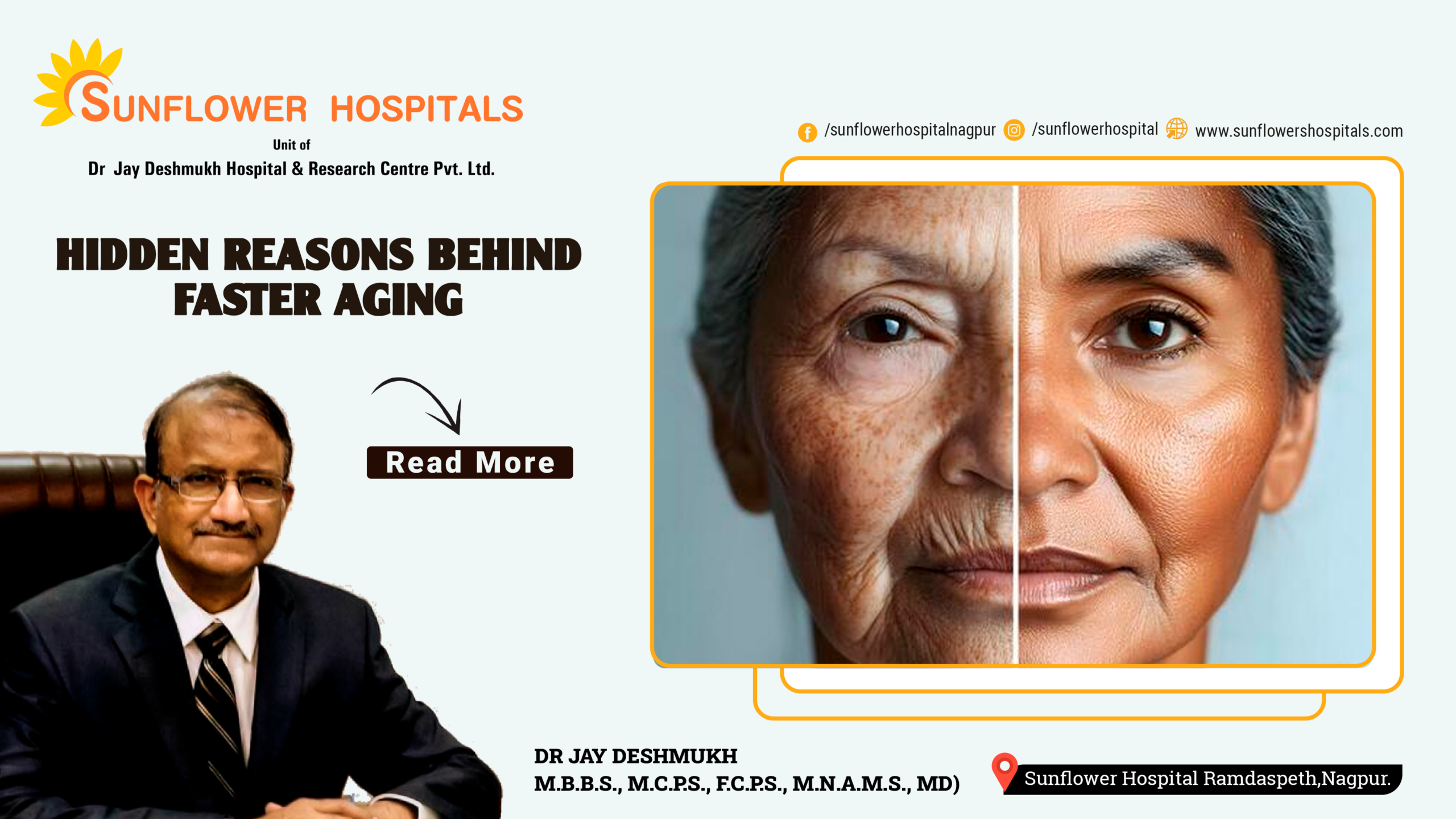
What exactly is aging?
Scientists now believe that aging is influenced not only by genes, but also by lifestyle, environment, stress, sleep, and nutrition.
Why do some people look much older than others of the same age?
Because biological age and calendar age are not always the same. Two people may both be 60 years old, but one may have healthy arteries, good muscle mass, and a sharp brain, while another may have diabetes, weak muscles, wrinkles, and memory decline. The second person is biologically older.
What are the biggest causes of accelerated aging?
The major causes include: smoking, diabetes, high blood pressure, obesity, lack of exercise, chronic stress, poor sleep, excess alcohol, pollution, processed food, and chronic inflammation. These factors damage cells and blood vessels over time.
Can exercise slow aging?
Absolutely. Regular exercise preserves muscle, protects the heart, improves insulin sensitivity, strengthens bones, and reduces dementia risk. Research suggests that physically active people may biologically age more slowly. Even walking briskly daily has major benefits.
Why does muscle loss become dangerous with age?
After 40, muscle mass gradually declines, a condition called sarcopenia. Loss of muscle increases falls, fractures, frailty, disability, and insulin resistance. Strong muscles are now considered one of the best predictors of healthy aging.
Can loneliness and depression accelerate aging?
Yes. Social isolation is associated with higher inflammation, cognitive decline, poor immunity, and increased mortality. Human beings age better when they remain socially active and emotionally connected.
Is inflammation related to aging?
Yes. Scientists call it inflammaging. Low-grade chronic inflammation contributes to heart disease, diabetes, arthritis, dementia, and cancer. Obesity, smoking, stress, and poor sleep all increase inflammation.

Author: Dr Jay Deshmukh
Dr Jay Deshmukh is Chief Physician and Director, Sunflower Hospital, Nagpur Honorary Physician to Honorable Governor of Maharashtra and PondicherryCentral. Dr Jay Deshmukh is an M.B.B.S., M.C.P.S., F.C.P.S., M.N.A.M.S., MD From Internal Medicine – Bombay and New Delhi.