
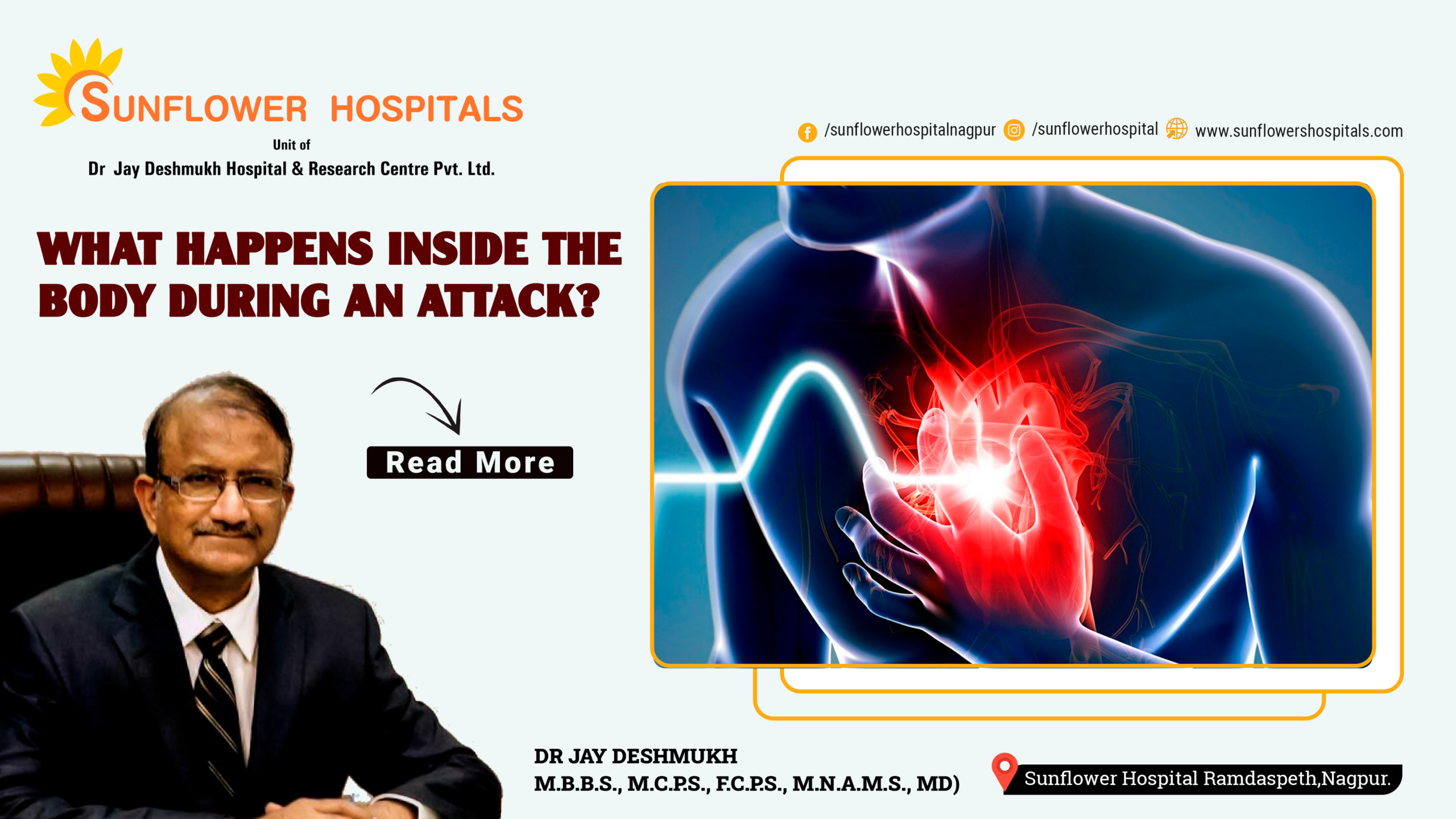
What exactly is a heart attack?
A heart attack occurs when blood flow to a part of the heart suddenly becomes blocked, depriving the heart muscle of blood and causing permanent damage to the muscle.
What usually causes this blockage?
Most heart attacks occur due to rupture of a cholesterol-rich plaque inside a coronary artery, followed by the formation of a blood clot.
What are the coronary arteries?
Coronary arteries are the blood vessels that supply oxygen and nutrients to the heart muscle.
Why does plaque form in arteries?
Plaque develops gradually due to:
High cholesterol
Diabetes
Smoking
High blood pressure
Obesity
Stress
Lack of exercise
What happens inside the heart during a heart attack?
When blood flow stops, the affected heart muscle starts losing oxygen and begins to die within minutes.
Why is immediate treatment so important?
“Time is muscle.” The longer the blockage remains, the greater the permanent damage to the heart.
What are the common symptoms of a heart attack?
Chest pain or pressure, Sweating, Breathlessness, Pain in arm, jaw, neck, or back, Nausea, Sudden weakness
Can a heart attack occur without severe chest pain?
Yes. Elderly people, women, and diabetics may present with mild symptoms, fatigue, breathlessness, or even silent heart attacks.

Author: Dr Jay Deshmukh
Dr Jay Deshmukh is Chief Physician and Director, Sunflower Hospital, Nagpur Honorary Physician to Honorable Governor of Maharashtra and PondicherryCentral. Dr Jay Deshmukh is an M.B.B.S., M.C.P.S., F.C.P.S., M.N.A.M.S., MD From Internal Medicine – Bombay and New Delhi.